Part 3 of 3 from Big Mike Fund Podcast Episode 309 with Chase Macleod
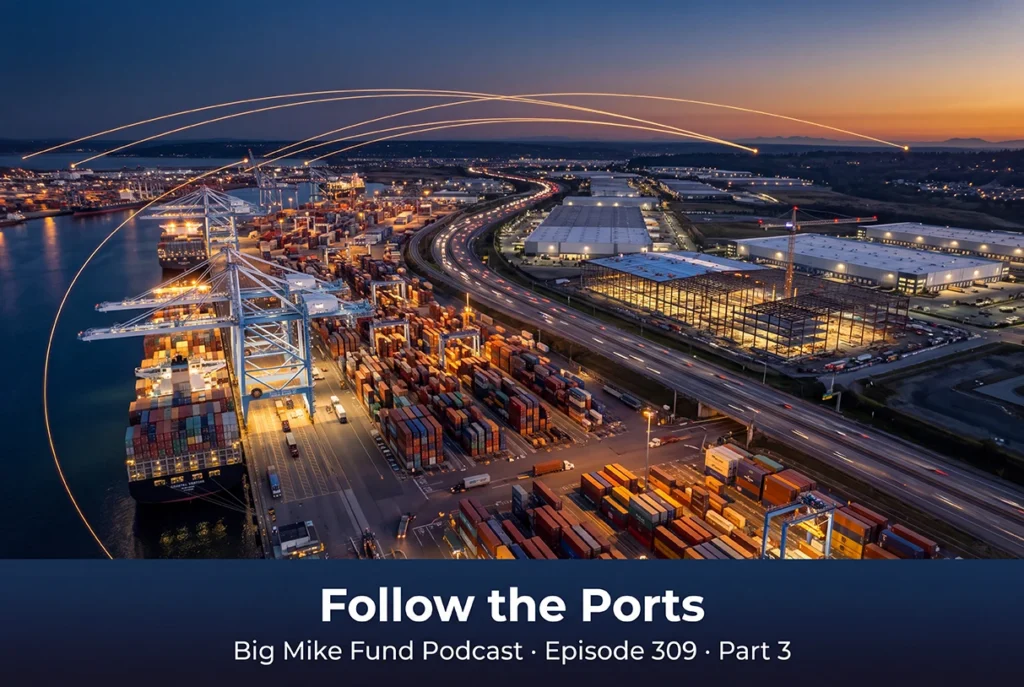
In Parts 1 and 2, Chase Macleod walked through two very different markets: supply-starved Dallas-Fort Worth and the tenant-friendly but supply-protected Inland Empire. In the final part of his conversation with Mike Zlotnik, he zoomed out to the port markets drawing the next wave of demand, and made the case that bulk warehouse investment today will reward the boldest investors.
Miami: driven by the port and air cargo
Macleod & Co. recently closed a 20,000 to 30,000-square-foot deal right next to Miami International Airport. Chase sees Miami’s fundamentals as similar to the Inland Empire’s, with one difference: leasing for small and mid-size deals has been stronger.
“Everything is port driven,” he said, and much of it is air-cargo driven too. Like the Inland Empire, Miami is hard to build in, unlike Dallas, Fort Worth or Houston. Chase expects tenant demand there to keep growing.
The Dallas, Houston, Savannah triangle
Chase described a pattern he sees again and again with his clients:
- Clients who ask about Dallas-Fort Worth almost always ask about Houston.
- Clients who ask about Houston, nine times out of ten, also ask about Savannah, Georgia.
The companies behind these questions aren’t household names. They’re mid-size distribution companies with five to fifteen locations nationwide, and they’re making big bets of 200,000 to 500,000 square feet in DFW, Houston, Savannah, Miami, Chicago and New Jersey. Dallas demand is largely population driven. Houston, Savannah and smaller ports like Jacksonville are on the radar for import logistics.
Mid-size 3PLs are triangulating their routes, Chase said, using options like slow steaming to Houston and routing through Miami or Savannah. It all comes down to turnaround time: how fast inventory in a warehouse can reach major population centers by truck.
More ports, more trade
Mike asked whether all this points to more globalization or less. His read: rising demand for space near ports means more shipping, which means more trade, not less.
Chase agreed that the underlying driver isn’t going away. “Our desire as a population to have it yesterday, I don’t think is going anywhere,” he said. He expects the extra costs layered onto shipping, importing and storage to readjust over time. When they do, he believes the Inland Empire, Texas, Florida and Georgia markets will all benefit dramatically.
The contrarian case for bulk warehouse investment
This is where Chase made his boldest call. Any investor willing to buy existing bulk warehousing in 2026, or any developer willing to build bulk over 300,000 square feet in these key markets, is taking on a perceived risk. The fundamentals still have to make sense. But he thinks the timing could pay off.
“I think it will feel painful in the moment today,” he said, “but I think you’ll create a basis and an opportunity, call it two years from now, where the supply is really going to get strangled in a lot of these key markets.”
In other words: the groups willing to buy vacant buildings, buy with short-term lease rollover, or build on spec now may be the ones holding scarce, well-priced product when demand catches up. Mike summed it up as a higher-risk, more speculative play that requires confidence in the future.
Pulling back the curtain
Chase closed with an offer. Whether you’re an investor sizing up a market or a business owner facing a lease decision, he’s happy to have an intro conversation and give an honest opinion, including telling you if a market isn’t right for your return targets.
His team also produces a YouTube series that walks through large transactions from start to finish, such as how a $32.5 million lease actually got done. As Chase put it, you might see the comp or the press release, but no one shares what happened behind the deal.
Connect with Chase Macleod
- Website: macleodco.com
- Email: chase@macleodco.com
- LinkedIn: linkedin.com/in/chase-macleod
- YouTube: @ChaseMacLeod
- Instagram: @chasemacleod
Listen to the full conversation on Episode 309 of the Big Mike Fund Podcast.